What Kinds of Halloween Decorations Generate the Highest Liability Exposure?
Americans will spend $4.3 billion on Halloween decorations in 2026 — but for Texas homeowners, some of those purchases carry significant legal risk. Here is a complete breakdown of the decoration types that generate the highest liability exposure tonight.
Extension Cords and Electrical Wiring: The #1 Tripping Hazard
The single highest-liability decoration element is also the most common — electrical cords crossing walkways. Rain, fallen leaves, electrical cords, and decorations can cause trip injuries — especially during Halloween when kids are wearing masks and long costumes that limit their vision and natural mobility. An extension cord that runs across a pathway is essentially an invisible trap for a child in a full-length costume or a mask with limited sightlines. Texas currently has above-normal moisture from El Niño conditions — making wet cords on slick pavement an even more dangerous combination than usual.
Large Inflatables and Freestanding Props: Wind Collapse Risk
Inflatables and large freestanding props generate a specific category of liability that spikes when weather is involved. If you leave Halloween decor up in your yard and face a nasty, wet front with high winds before or after the holiday, the exposure is very real. A large inflatable that collapses onto a trick-or-treater or topples into a neighbor’s vehicle creates both premises liability and property damage claims simultaneously. The dangers are greatest for children trick-or-treating, older neighbors, and delivery drivers.
Open Flame Decorations: Fire and Burn Liability
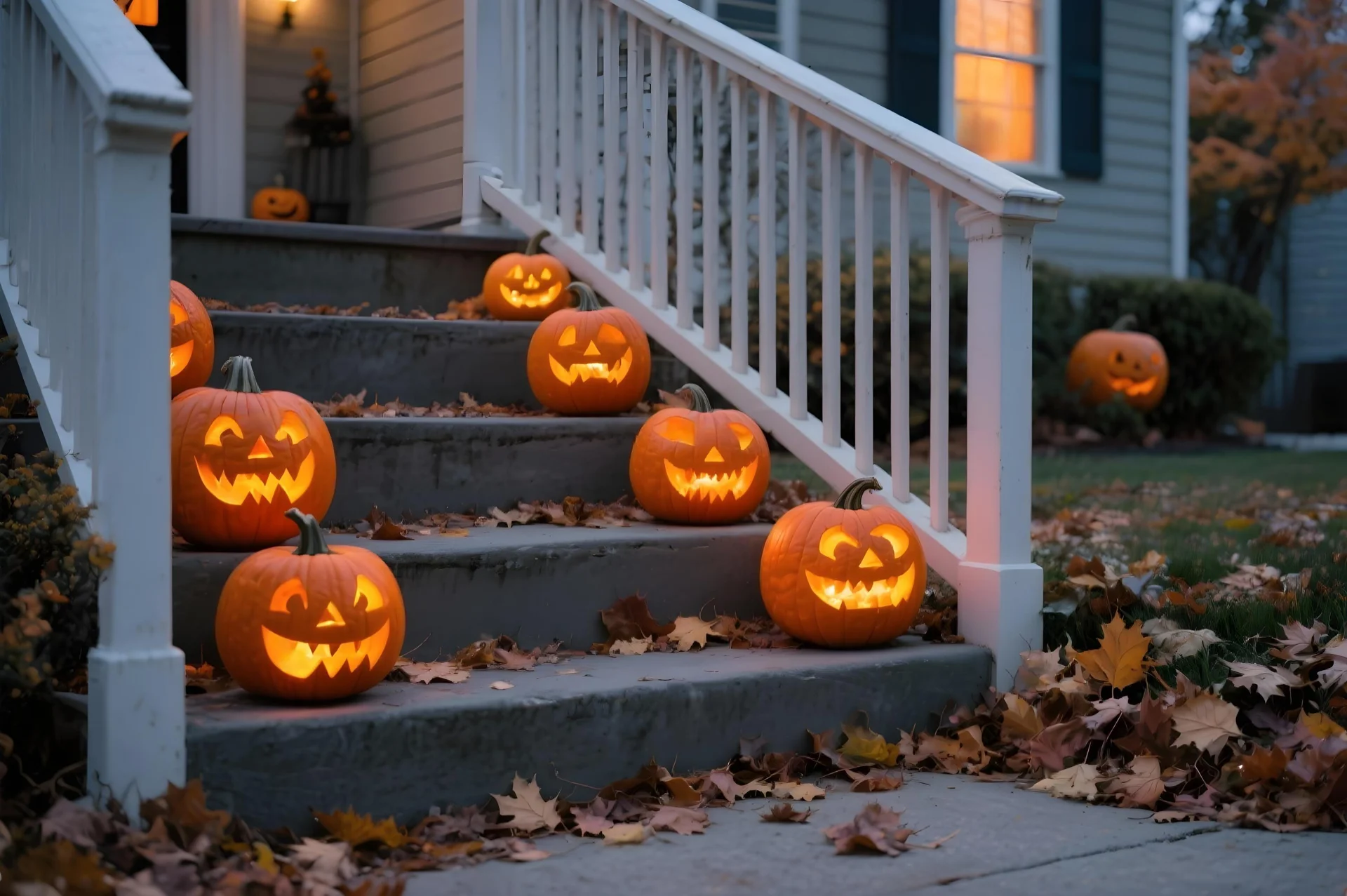
Candles inside jack-o’-lanterns and flammable decorations made from corn stalks, crepe paper, or dried flowers generate the most severe injury exposure of any decoration category. The National Fire Protection Association reports an average of 832 home fires per year started by decorations — with nearly half beginning because a decoration sat too close to a heat source and candles starting about a third of them. American homeowners experienced $18 million in property damage per year from holiday decorations catching fire between 2020 and 2024.
Defective Imported Decorations: Product Liability on Top of Premises Liability
One often-overlooked category is defective imported decorations — particularly those with faulty wiring, unstable bases, or toxic materials. Under product liability law, you do not have to prove negligence — only that the product was defective and caused injury. However, the homeowner who displayed the defective decoration may still face premises liability alongside the manufacturer’s product liability exposure.
What to Do Tonight
Tape every cord to the ground, use battery-operated lights instead of candles, anchor all inflatables and freestanding props, ensure adequate pathway lighting, and remove any decoration that creates an obvious visual obstruction. Your homeowners liability coverage — typically $100,000 to $300,000 — is your financial safety net tonight. Contact the Texas Department of Insurance with any coverage questions.